Dining Room Flooring: Chairs, Spills and an Open Floor Plan
· 6 min read · By Floors To You OKC

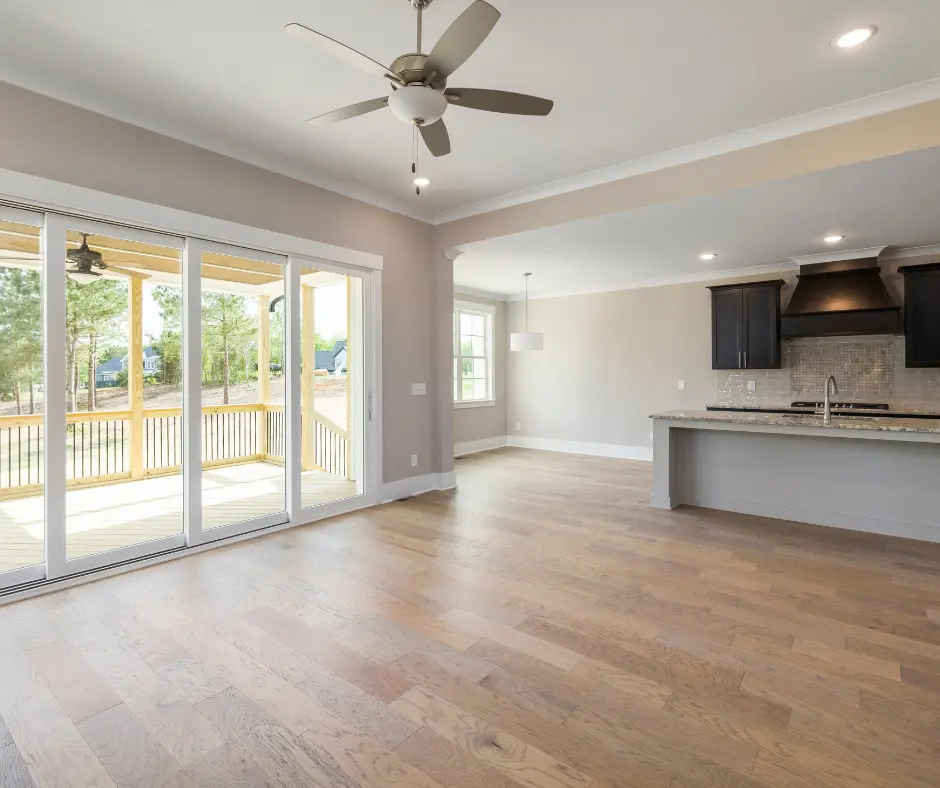
The dining room floor has a simple but unusual job. Chairs scrape across it at every meal, food and drinks land on it, and in many newer Oklahoma City homes it is not a separate room at all but the space between the kitchen and the living room. A formal dining room can be the place for your most beautiful floor, and an everyday dining area needs to be the most forgiving. Here is how the options compare.
What a dining floor has to handle
Two things wear a dining room floor: chairs and spills. Every time someone sits down or gets up, a chair slides a few inches, usually in the same spots around the table. Without protection, that leaves scratches and dull patches in a ring around the table. Then there are the spills, from a knocked-over glass to a toddler's whole plate.
How you use the room changes the answer. A formal dining room used for holidays can lean toward looks. A dining nook used three times a day by a family with kids and a dog needs to lean toward durability and easy cleaning.
Luxury vinyl plank for everyday dining
Luxury vinyl plank is the most practical floor for a dining area that gets used every day. It is waterproof, so spills are a wipe-up, a good wear layer resists chair scuffs, and it comes in wood looks that sit comfortably next to a nice table. Because it also handles the kitchen, it is the easiest floor to run through an open kitchen and dining space with no transition.
Hardwood and engineered wood
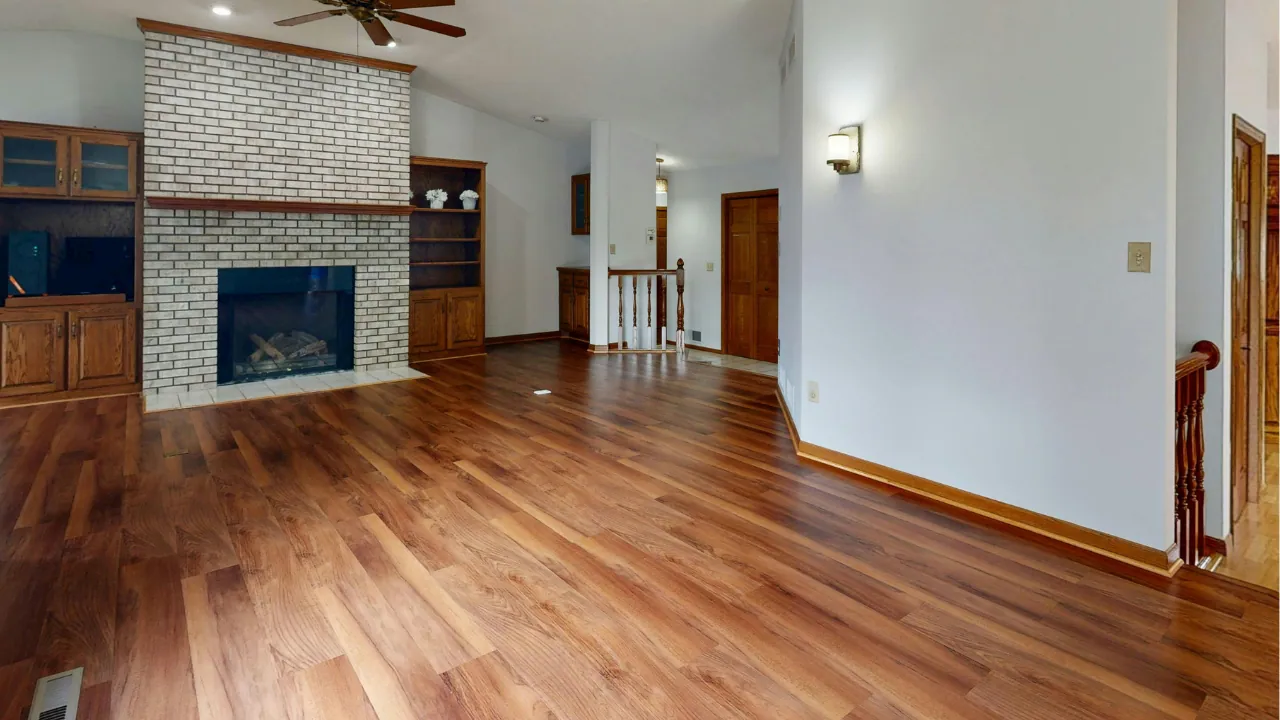
Real wood is the classic dining room floor, and in a formal dining room it is hard to beat. Solid hardwood can be sanded and refinished, so chair wear is not permanent. Engineered wood gives a real wood surface over a stable layered core, and it is made to go over the concrete slabs most metro homes sit on.
The trade-off is that wood is softer than most people expect and does not like water. A spill wiped up quickly is fine; a puddle under the table overnight is not. Our comparison of hardwood and luxury vinyl walks through the choice.
Laminate and tile
Laminate has a hard, scratch-resistant surface that handles chair legs well, and we stock AC4 and higher commercial-grade lines. It handles everyday spills wiped up promptly, but its wood-based core does not like water left sitting, so it suits a separate dining room better than one that shares a floor with the kitchen sink.
Porcelain tile is the toughest option and ignores both chairs and spills. It is harder and cooler underfoot, and anything dropped on it is more likely to break, so it is most common where the dining area is part of a tiled kitchen.
Carpet and area rugs
Wall-to-wall carpet is rare in dining rooms now, because food stains and sliding chairs are hard on it. An area rug under the table is still popular for warmth and sound. If you use one, make it large enough that the chairs stay on the rug when they are pulled out, so the back legs do not catch on the edge. Use a rug pad the floor maker says is safe for their product.
Protecting the floor from chairs
Chair legs do most of the damage in a dining room, and most of it is preventable.
- ✓Put felt pads on every chair leg and replace them when they wear thin
- ✓Check pads a couple of times a year, since a pad with grit in it scratches like sandpaper
- ✓Sweep under the table after meals, because crumbs and grit under chair legs cause most scratches
- ✓Lift the table to move it rather than sliding it
- ✓Wipe up spills right away, especially on wood and laminate
Open kitchen and dining areas
In many OKC homes the dining area shares an open space with the kitchen and living room, so the dining floor is really the kitchen floor. That usually points to a waterproof floor that looks good enough for the whole space. Our guides to kitchen flooring and using the same flooring throughout the house explain how to plan one floor across connected rooms.
If the dining room is a separate room, you have more freedom. It can match the hall, or it can be the one room with real wood. Our guide to transitions and baseboards covers how to make two floors meet cleanly at a doorway.
See samples under your own table
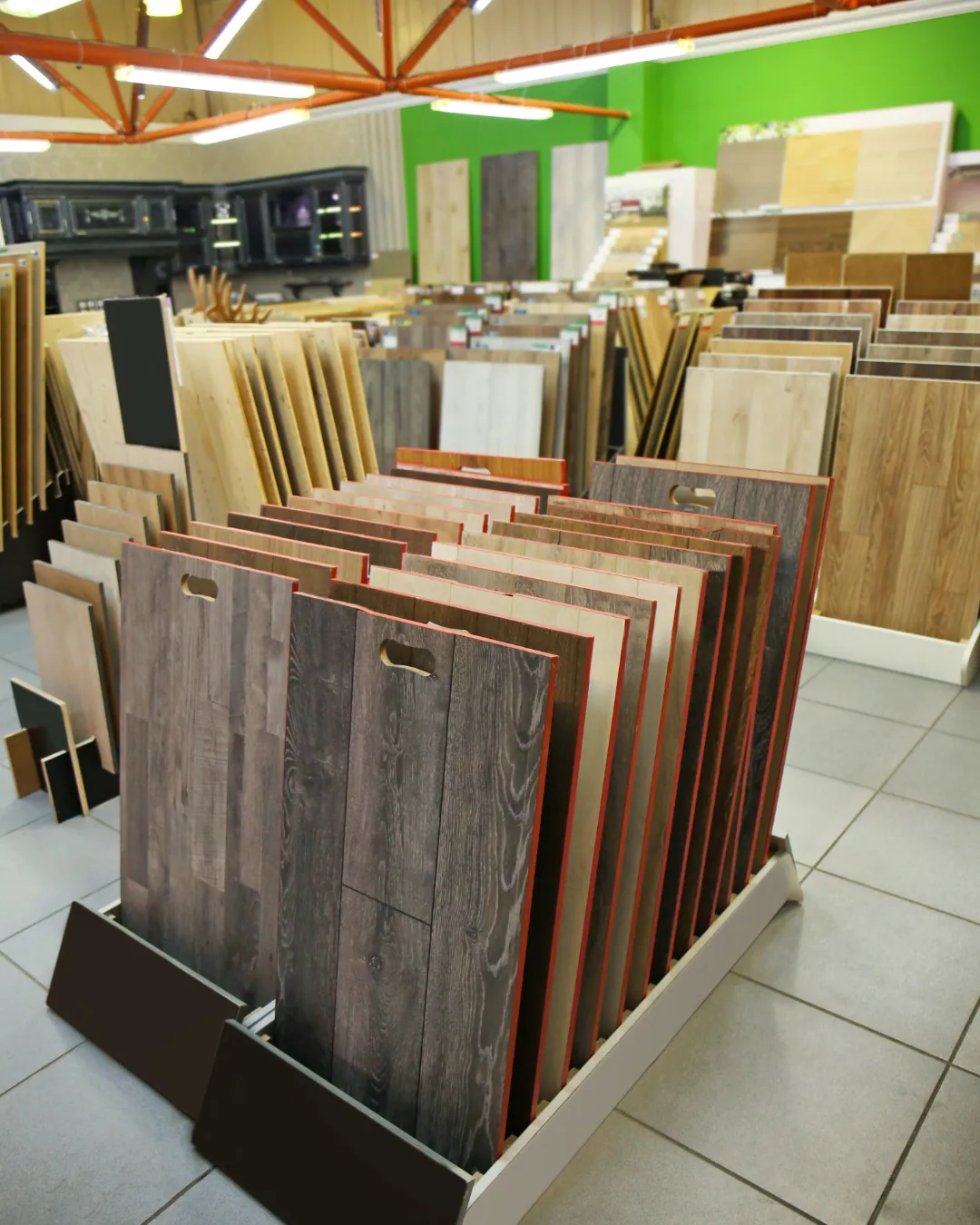
A floor sample looks different under a dining table and a chandelier than it does in a store. Look at samples next to your table and chairs, in daylight and in the evening light you actually eat by. Our post on choosing a floor color helps with the color side.
Book a free in-home estimate and we will bring samples to your dining room, measure it with the rooms it opens into, and give you an itemized quote. Our crew moves the table, chairs and furniture and puts them back.