Ceramic vs. Porcelain vs. Natural Stone for OKC Bathrooms
· 7 min read · By Floors To You OKC
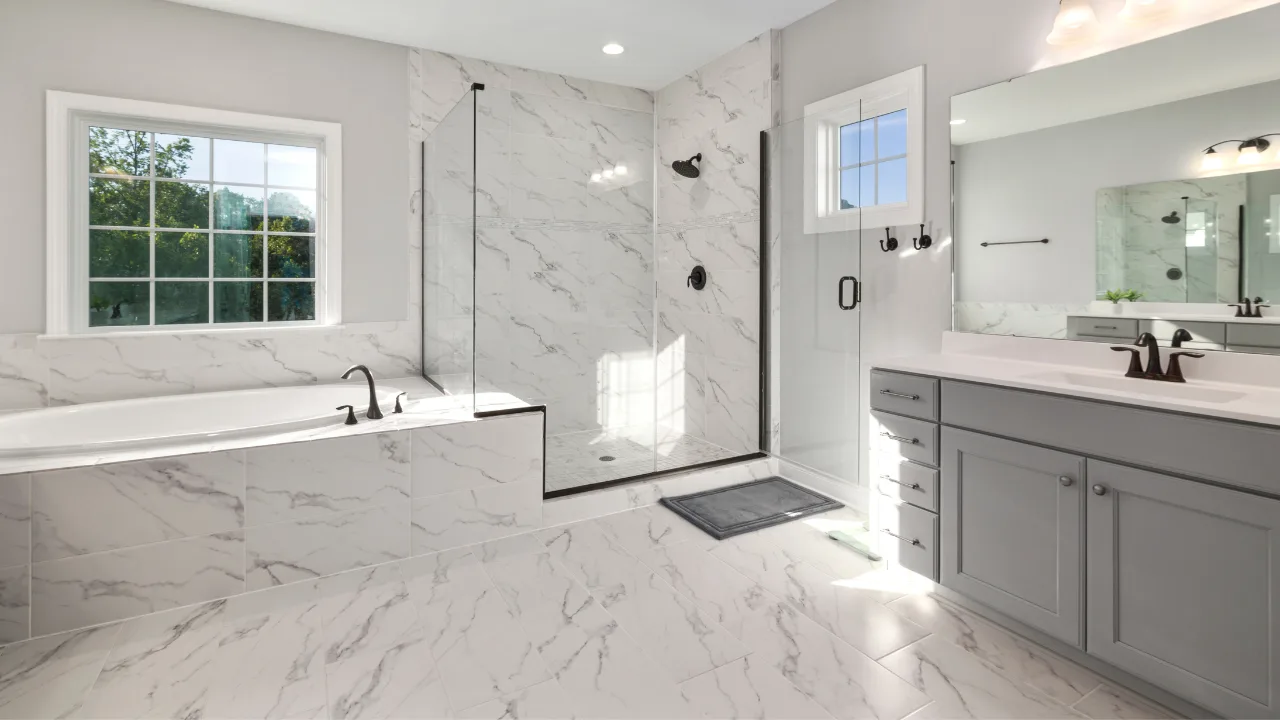
Three tile options, three price points, and a showroom wall that makes them look almost interchangeable. The differences that matter in a bathroom are not the ones you can see standing up — they are density, water absorption and what each one asks of you once it is installed. Here is how we talk Oklahoma City homeowners through the choice.
The real dividing line is density
Ceramic and porcelain are both fired clay. The difference is how densely they are pressed and how hot they are fired. Porcelain comes out denser and absorbs far less water, which is the property that matters in a room where water lands on the floor regularly.
Natural stone is a different category entirely. It is quarried rather than manufactured, so no two pieces match and the material is porous by nature. That porosity is why stone is the option that comes with ongoing maintenance attached.
Ceramic: the budget-sensible choice with a caveat
Ceramic is easier to cut and generally cheaper, which keeps both material and labour down. For a guest bathroom or a powder room that sees light use, it is a perfectly sound choice and we install a lot of it.
The caveat is that ceramic is softer and more absorbent than porcelain. In a main bathroom used by a whole family, or anywhere a shower door drips onto the floor daily, the extra density of porcelain earns its cost difference over the life of the floor.
Porcelain: the default for wet rooms
For most Oklahoma City bathrooms, porcelain is where we land. It is dense enough that water sitting on it is a non-event, hard enough that it does not scuff, and modern printing means the wood-look and stone-look ranges are genuinely convincing rather than obviously fake.
Through-body porcelain, where the colour runs the full thickness rather than sitting on a printed surface, is worth asking about for a floor that will see heavy use. A chip on a printed tile shows the body underneath; on a through-body tile it barely registers.
- ✓Lower water absorption than ceramic, which is the point in a bathroom.
- ✓Harder wearing, so it holds up in a main bathroom rather than just a guest one.
- ✓Wood-look and stone-look ranges give you the appearance without the upkeep.
- ✓Costs more to cut and set, so labour is slightly higher than ceramic.
Natural stone: beautiful, and a commitment
Marble, travertine and slate bring something manufactured tile cannot fake, because the variation is real. If that is what you want, nothing else will satisfy.
What you are signing up for is sealing. Stone is porous, so it needs sealing on installation and re-sealing periodically for as long as you own it. Skip that and it stains — and in a bathroom the staining agents are everyday products. It is also softer than porcelain, so acidic cleaners will etch it. If nobody in the house is going to keep up with that, porcelain that looks like stone is the honest recommendation.
What matters more than the tile you pick
Bathrooms fail at the joints and the substrate, not in the middle of a tile. Whichever material you choose, the waterproofing behind it and the quality of the substrate underneath decide whether the floor is sound in fifteen years.
Slip resistance is the other thing to raise in the showroom. A polished finish that looks superb dry can be genuinely unsafe wet, and bathroom floors get wet. There are textured and honed finishes in every one of these three materials that solve it without costing you the look.