How to Choose a Floor Color That Works With Your Home
· 7 min read · By Floors To You OKC
Picking the type of floor is usually the easy part. Picking the color is where people get stuck, holding a small sample against the wall and trying to imagine it across the whole house. It is also the decision you will live with longest. Paint can change in a weekend; a floor stays put for fifteen years or more. Here is how we help Oklahoma City homeowners choose a color they will still like long after install day.
Start with what is not changing
A floor color is never chosen in isolation. It has to work with everything in the room that is staying: cabinets, countertops, the fireplace, stair rails, interior doors, trim and the furniture you already own. Make a quick list of those before you look at a single sample, because they narrow the field faster than anything else.
Walls come last, not first. Paint is the cheapest and easiest thing in the room to change, so it should adapt to the floor, not the other way around.
Undertone matters more than shade
Every wood or wood-look floor has an undertone. Warm floors lean red, orange or golden. Cool floors lean gray or ashy. Neutral floors sit in between. Two floors that look the same "medium brown" in a showroom can look completely different next to your cabinets because their undertones clash.
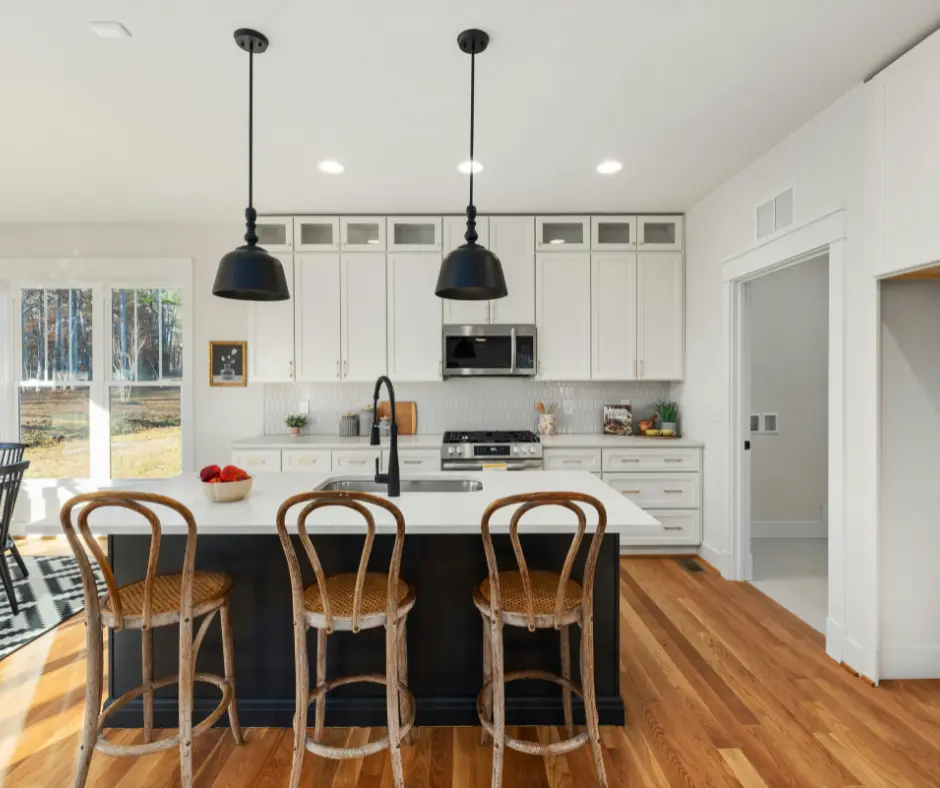
As a rule, pick a floor whose undertone works with your cabinets and trim, but not one that matches the cabinet color exactly. A floor that is almost but not quite the same as the cabinets looks like a mistake. Clear contrast, a lighter floor with darker cabinets or the other way round, almost always looks intentional.
Light, mid-tone or dark: what each one shows
The shade you choose decides what you will see on the floor every day. This is the part people most often wish they had thought about.
- ✓Dark floors look rich but show dust, pet hair, footprints and light-colored scratches quickly
- ✓Very light floors make rooms feel bigger and hide dust well, but show dark dirt, spills and red Oklahoma clay tracked in from outside
- ✓Mid-tone floors with some grain and color variation are the most forgiving, hiding both dust and dirt between cleanings
- ✓In a house with pets, a floor close to the color of your pet’s coat hides hair best
Your light changes the color
The same plank looks different in a north-facing room with soft, cool light than in a west-facing room with strong Oklahoma afternoon sun. Light bulbs change it too: warm white bulbs push a floor toward yellow and orange, and cool white bulbs make it look grayer.
That is why a floor should be chosen in the room where it is going, not under showroom lights. Look at samples in the morning, in the afternoon and at night with the lights on. If a color still looks right at all three, it is a good sign.
Size, flow and finish
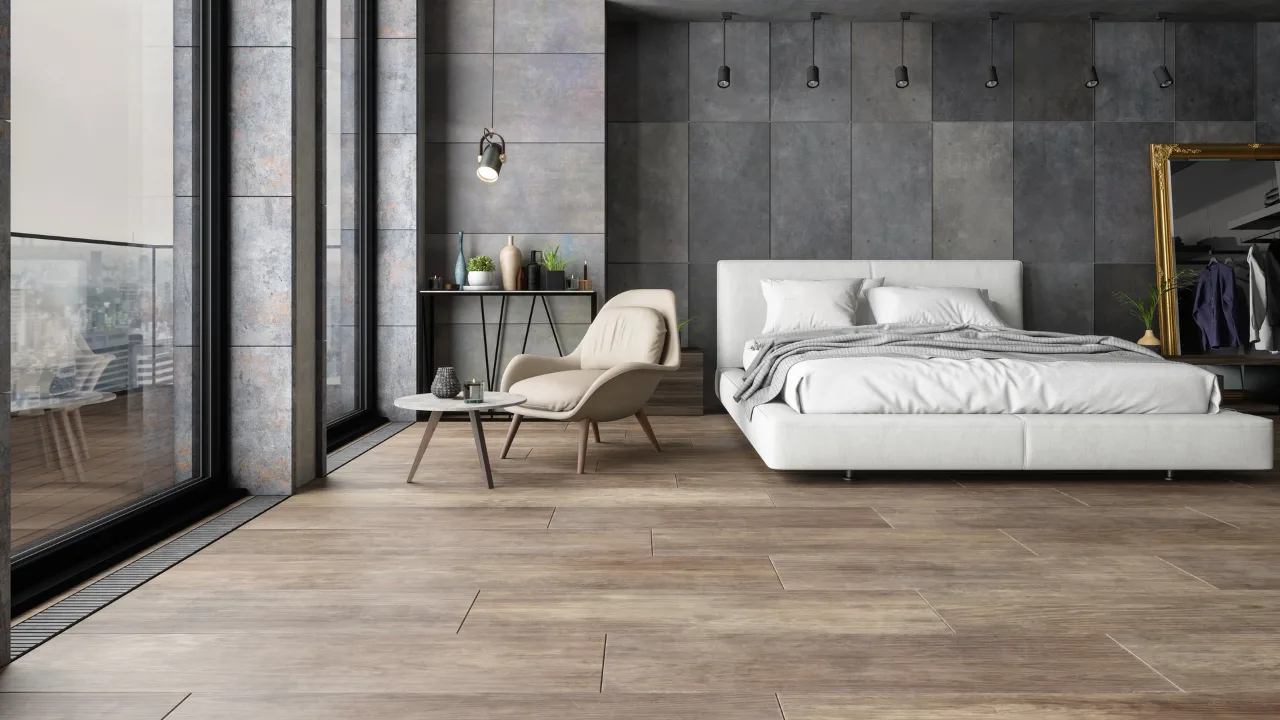
In smaller rooms and homes, lighter and mid-tone floors help the space feel more open, and running one floor continuously through the main living areas makes the whole floor plan feel larger than a different floor in every room. If you are using two floor types, say LVP in the living areas and carpet in the bedrooms, choose colors from the same family so they work together where they meet.
Look at the finish as well as the color. A matte or low-sheen surface hides scratches, scuffs and footprints far better than a glossy one. A visible grain and some plank-to-plank variation look more natural and disguise everyday wear, though a very busy pattern can overwhelm a small room. Our luxury vinyl plank buyer’s guide covers the texture and finish options.
Trendy versus lasting
Floor colors do follow trends. The cool grays that went into a lot of homes a few years ago are a good example: in many of the newer installs we see, homeowners are moving back toward warmer, natural wood tones. The safest choice for longevity is usually a natural-looking mid-tone with a little warmth, which fits a wide range of styles and furniture.
If you might sell in the next few years, lean even further toward neutral. Our guide to flooring before selling your home explains why. If you are staying for the long haul, choose what you love, as long as it also passes the dirt, light and cabinet tests above.
See it in your own home before you decide
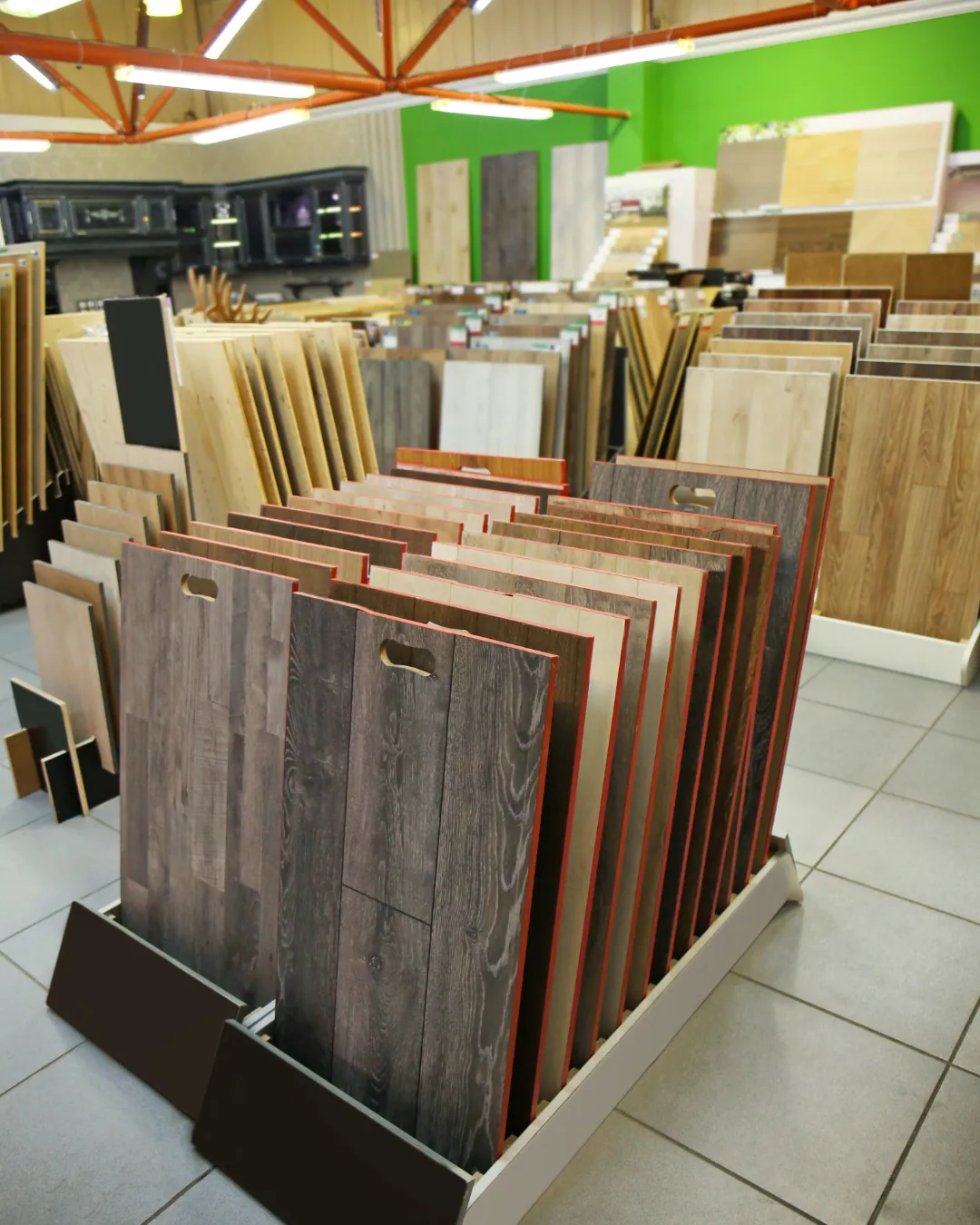
A small chip in a showroom is a poor way to choose a floor. Lay several full-size planks side by side on your floor, next to your cabinets, so you see the color variation across planks and not just one piece. That is exactly why we bring the showroom to you: samples go down in your rooms, in your light, against your cabinets and furniture. Our post on how our mobile showroom works explains the visit.
Book a free in-home estimate and we will bring a selection of colors in the floor types that suit each room, help you narrow it down, and measure while we are there.