Engineered Wood Flooring in OKC: Real Wood That Handles the Climate
· 7 min read · By Floors To You OKC
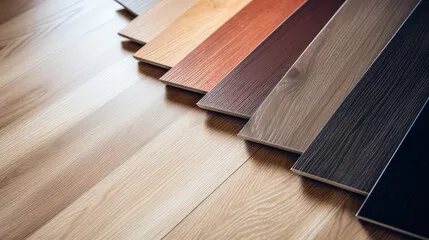
Engineered wood gets misunderstood constantly. People hear "engineered" and assume it is a lookalike product like laminate or vinyl. It is not — the surface you walk on is genuine hardwood. What is engineered is the layer underneath, and in an Oklahoma climate that engineering is exactly why it often outperforms solid wood.
What engineered wood actually is
An engineered board has a real hardwood wear layer on top — actual oak, hickory, walnut, whatever species you chose — bonded to a core of plywood or high-density fiberboard beneath it.
The core layers are cross-oriented, meaning the grain of each layer runs perpendicular to the one above. That cross-lamination is what stops the board from expanding and contracting across its width the way a solid plank does. The wood on top is real; the stability underneath is engineered.
This is a completely different product from laminate or vinyl, both of which use a printed image of wood. With engineered, you are looking at wood grain because it is wood.
Why stability matters in Oklahoma
Wood is hygroscopic — it absorbs and releases moisture from the surrounding air, expanding and contracting as it does. Oklahoma puts real stress on that behavior. Humid stretches in spring and summer, dry heated air in winter, and significant temperature swings that can happen inside a single week.
Solid hardwood responds to all of that by moving across its width. In practice that means gaps opening between boards in winter and boards pressing tight in summer. Manage it well and it is a non-issue; manage it poorly and it is visible year-round.
Engineered wood moves substantially less because the cross-laminated core resists it. That makes it more forgiving of humidity swings, and it is why engineered has become the more practical choice in a lot of Oklahoma homes.
The slab question
A great many Oklahoma City homes are built on a concrete slab, and this is where engineered wood has a decisive advantage.
Solid hardwood is generally not recommended directly over concrete. Slabs pass moisture vapor upward from the ground continuously, and solid wood reacts badly to that over time. Engineered wood can be installed over a slab — glued down or floated — because the cross-laminated core handles the moisture exposure that would ruin solid boards.
If you want real wood in a slab-on-grade home, engineered is usually the only sensible way to get it. A moisture test on the slab before installation is worth doing regardless.
Wear layer thickness decides everything
This is the single most important spec in engineered wood, and it is the one that separates a floor you can keep for decades from one you will replace.
The wear layer is the real hardwood on top. Its thickness determines whether the floor can ever be sanded and refinished, and how many times.
A thick wear layer can be refinished once or twice, which means the floor can be brought back when it gets tired rather than torn out. A thin wear layer cannot be sanded at all — sanding goes straight through the real wood into the core beneath, and that is the end of the floor.
Ask for the wear layer thickness before anything else. If a product is being sold as real wood but cannot ever be refinished, that changes the value proposition significantly, and you should know it going in.
Species and finish still matter
Because the top layer is genuine hardwood, all the normal wood decisions apply.
- ✓Oak is the most common for good reason — hard, available, and its strong grain hides scratches and dents better than smoother species.
- ✓Hickory is harder still, with dramatic color variation board to board, which suits busy households and reads more rustic.
- ✓Walnut is beautiful and naturally dark, and noticeably softer, so it belongs in formal rooms rather than mudrooms.
- ✓Prefinished factory coatings are generally more durable than site-applied finish, and they let you see exactly what you are getting before installation.
- ✓Wider planks read modern and show off grain. Engineered handles wide plank far better than solid does, because width is exactly where solid wood movement shows up.
Engineered vs. solid, honestly
Solid hardwood wins on one significant point: it can be sanded and refinished many times over a very long life, which is why century-old floors still exist. If you are in a house you intend to keep indefinitely, over a wood subfloor, above grade, that longevity is real.
Engineered wins on stability, on slab compatibility, on wide-plank options, and on installation flexibility. In an Oklahoma home, especially one on a slab, those advantages usually outweigh the refinishing ceiling.
If you are weighing real wood against a wood-look product, our hardwood vs. luxury vinyl comparison covers that side of the decision.