Hardwood Floor Installation in Oklahoma City: Slabs, Engineered Wood and What Drives the Cost
· 8 min read · By Floors To You OKC
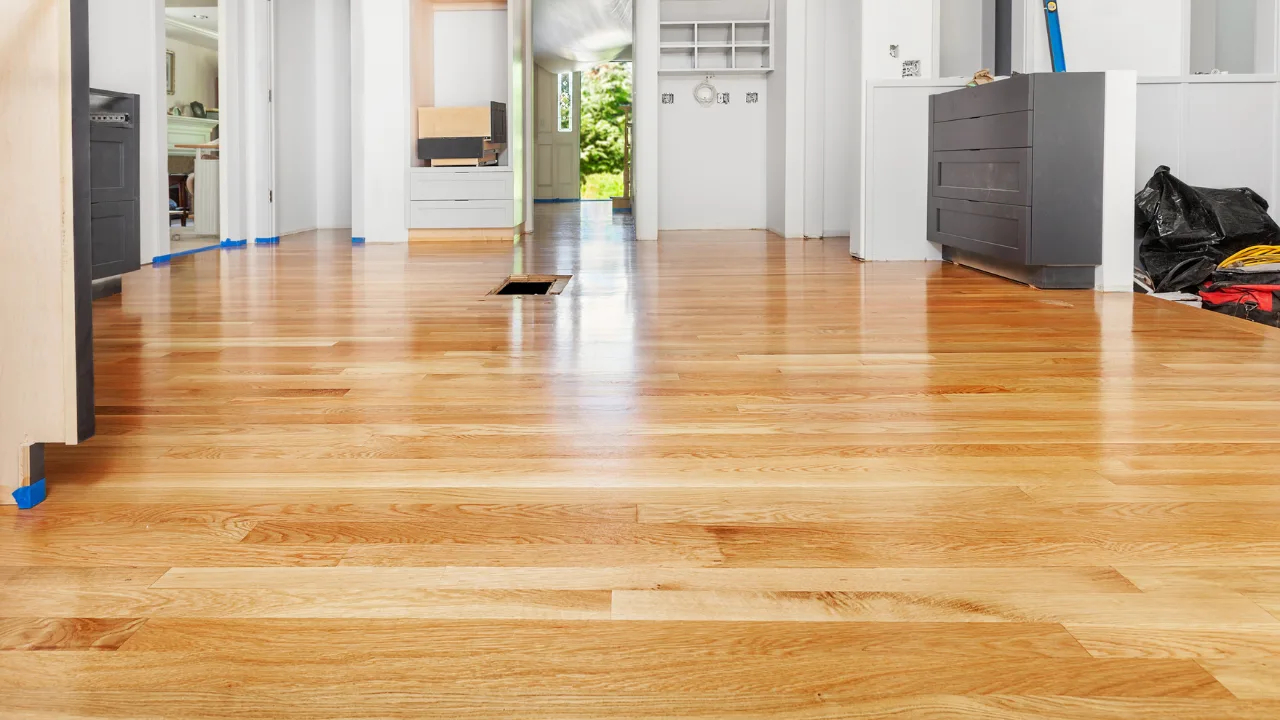
Hardwood is the floor Oklahoma City buyers ask about first, and it is also the floor where installation matters most. Wood moves with moisture, Oklahoma swings from humid summers to dry winters, and a large share of metro homes are built on a concrete slab. Get the install right and a hardwood floor outlives the house. Get it wrong and it cups by the second August. Here is how a proper hardwood installation works in OKC, and what it means for your quote.
Start with what is under your house
Everything about a hardwood install follows from the subfloor. In Oklahoma City there are two kinds: a plywood or OSB subfloor over a crawlspace or basement, and a concrete slab poured directly on the ground. Newer subdivisions in Edmond, Yukon, Mustang and south OKC are overwhelmingly slab. Older neighborhoods closer to the core are more often wood-framed.
On a wood subfloor, solid hardwood is nailed down the traditional way. On a slab, solid hardwood cannot be nailed at all. That leaves two honest options: build a plywood subfloor on top of the slab first, which adds height and cost, or use engineered hardwood, which floats or glues directly to the concrete. For most slab-built homes we recommend the second. Our guide to engineered wood flooring in OKC explains why it is real wood with a more stable core, and Oklahoma clay soil and your floors covers what the ground itself does to a slab over time.
- ✓Wood subfloor: solid or engineered, nailed or stapled down
- ✓Concrete slab: engineered hardwood, glued or floated
- ✓Solid hardwood on slab: only over a built-up plywood subfloor, with added height and cost
Moisture readings come before anything else
Every hardwood job we do starts with a moisture meter on the subfloor. A slab can look bone dry and still be releasing water vapor that will cup a hardwood floor from underneath. Wood subfloors near bathrooms, exterior doors and old leaks read high more often than people expect.
If the reading is out of range for the product, the fix depends on the cause: a vapor retarder under a floating floor, a moisture-mitigating adhesive under a glue-down, or in some cases waiting for a slab to dry after a plumbing repair. What we will not do is install over a wet subfloor and hope. That is how a floor fails inside its first year, and the warranty will not cover it.
Acclimation: the step people try to skip
Wood takes on and releases moisture until it matches the air around it. If planks go down straight off a delivery truck in July, they shrink over the winter and gap. If they go down straight from a cold warehouse in January, they swell in summer and crown.
So the material sits in your home for several days before installation, in the rooms it is going into, with the HVAC running at normal living temperature. We schedule the delivery and the install around that window so it costs you no extra time in the calendar, just a few days between the two dates. Keeping indoor humidity between roughly 35 and 55 percent year-round afterward is what keeps the floor stable, and it is the single best piece of maintenance advice for hardwood in Oklahoma.
Nail, glue or float: what each method is for
Nail-down is the classic method for solid hardwood over a plywood subfloor. Each plank is blind-nailed or stapled through the tongue. It is fast on a good subfloor and produces the solid, quiet feel people associate with traditional wood floors.
Glue-down is the standard for engineered hardwood over a slab. A full spread of urethane adhesive bonds the plank to the concrete. It feels solid underfoot with no hollow sound, and the right adhesive doubles as a moisture barrier. It takes longer and the slab has to be flat and clean.
Floating engineered planks click or glue to each other and rest on an underlayment without attaching to the subfloor. It is the fastest method and the most forgiving of minor slab variation, and it is how a lot of OKC engineered installs are done. It needs an expansion gap at every wall and can sound slightly hollower than glue-down.
We choose the method for your subfloor and your product, and we tell you which one you are getting and why. Our hardwood flooring and engineered wood pages cover the products we stock for each approach.
Subfloor prep on a slab
Slabs are never perfectly flat, and hardwood has a tighter flatness tolerance than vinyl. High spots get ground down and low spots get filled with a cement-based patch or self-leveling compound before any wood goes down. Cracks are addressed. Old adhesive from a previous floor is removed. This is the least glamorous part of the job and the one that most decides how the floor feels in five years. Our subfloor prep guide goes deeper on what we look for.
How long it takes
Most single-room hardwood installs finish in a day. A whole main floor typically runs two to three days. Add the acclimation window before that, and a day if the subfloor needs significant leveling. Glue-down takes longer than floating for the same square footage because of adhesive open time and the care the spread requires.
Because hardwood is often a special-order product, plan for five to ten business days between accepting the quote and the material arriving, on top of acclimation. In-stock engineered lines shorten that considerably. Our installation timeline guide compares this against other materials.
What actually moves the price
We do not publish per-square-foot prices because two houses with the same square footage can be very different jobs. What we can tell you is what changes the number, so you can read any hardwood quote you get.
- ✓Solid vs engineered, and the species and plank width you choose
- ✓Whether the slab needs leveling or moisture mitigation, and how much
- ✓Removing and hauling the existing floor, especially glued-down material
- ✓Glue-down vs floating labor
- ✓Stairs, which are always priced separately and take longer per step than any floor area
- ✓Transitions to other flooring, and whether door bottoms need trimming for the new height
- ✓Waste factor, typically 7 to 10 percent for straight-lay, more for herringbone or diagonal layouts
Finish and species choices that affect living with it
Species and finish matter more than most people expect for durability. Hickory is harder than oak and takes more abuse; walnut is softer and shows dents. A matte or wire-brushed finish hides paw scratches and dust far better than a high-gloss one. If your household is hard on floors, we will show you these side by side at the estimate, along with waterproof wood-look options so you can compare honestly. Our hardwood vs luxury vinyl guide covers that decision.
Engineered wood with a 3 to 6 mm wear layer can be light-sanded and refinished two or three times over its life, which is what lets a floor installed today still look new in thirty years.
What we include
Moisture readings, acclimation scheduling, expansion gaps and subfloor assessment are part of every Floors To You OKC hardwood install, not upcharges. Our lead installers are W-2 employees, and we back every install with a 100 percent labor guarantee for as long as you own the floor. Engineered lines we stock carry a lifetime structural warranty from the manufacturer.
To get a real number for your house, book a free in-home estimate. We bring the samples, read the slab, and itemize the whole job so you can see exactly where the money goes. If you want to spread the cost, 0% financing for 24 months is available on approved credit.