Subfloor Prep: The Step That Decides Whether Your Floor Lasts
· 6 min read · By Floors To You OKC

When a floor fails early, it is very rarely the flooring that failed. It is what was underneath it. Subfloor preparation is invisible on handover day, it is the easiest line to trim from a quote, and it is the thing that decides whether your floor looks right in year five. Here is what it involves and what to ask before you sign anything.
Flatness is not the same as level
A floor can slope gently across a whole room and be perfectly fine to install over. What causes problems is local unevenness — dips and humps over short distances. Manufacturers publish flatness tolerances for their products, and installing outside them is what voids warranties.
Rigid materials are least forgiving. Tile set over a dip will crack at the grout, and a click-together plank floor over an uneven substrate will flex at the joints until the locking mechanism gives up, which is heard as a hollow spot underfoot before it is seen.
Moisture, especially on slab
Concrete slabs pass moisture vapour upward, and the amount varies with the season and what is happening outside the house. Putting a moisture-sensitive floor or the wrong adhesive over a slab that is giving off vapour is a slow failure that shows up as adhesive breakdown, cupping or a smell.
The answer is to measure rather than assume, and to use the appropriate barrier or underlayment where the reading calls for it. On the clay soils common around Oklahoma City, seasonal variation in slab moisture is worth taking seriously.
What proper preparation actually involves
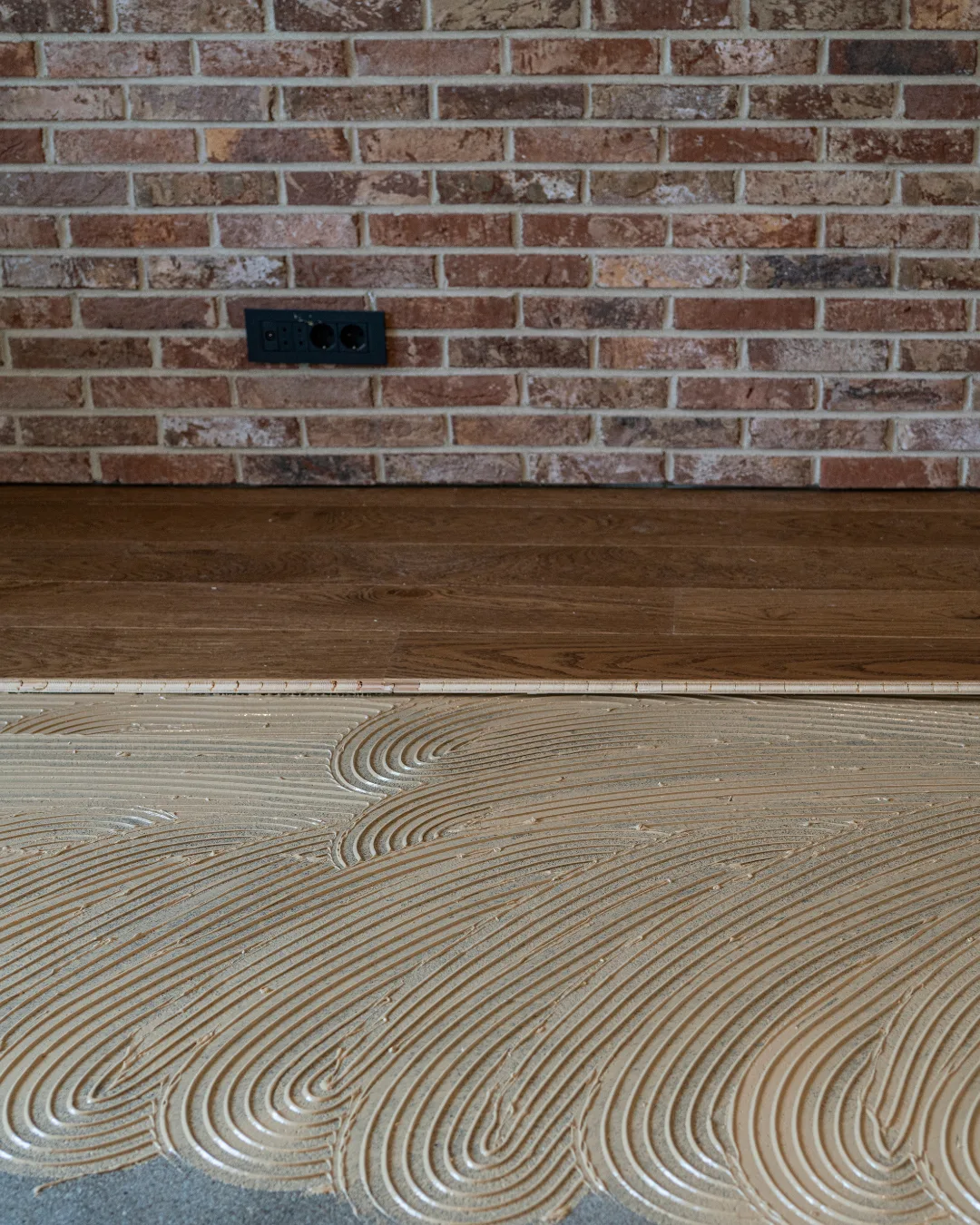
It starts with getting the old floor and all its residue off — old adhesive, staples, tack strip, and any patching material that is no longer sound. Then the substrate is checked for flatness and moisture, and corrected where needed with levelling compound or patching.
On wood subfloors it also means checking for movement and refastening where there is any. A squeaky subfloor does not stop squeaking because a new floor went over it, and once the new floor is down that opportunity has passed.
- ✓Complete removal of old material and residue.
- ✓Flatness checked against the manufacturer tolerance, not by eye.
- ✓Moisture measured on slab, not assumed.
- ✓Loose or squeaking wood subfloor refastened before covering.
Why cheap quotes are cheap here
When two quotes differ substantially on the same material, subfloor preparation is usually most of the gap. It is genuinely difficult to compare unless it is written down, because "install flooring" can mean anything from a full preparation to laying planks straight over whatever is there.
Ask any installer what their quote assumes about the subfloor and what happens if it turns out to need work. An honest answer describes how it will be assessed and how any additional work will be priced. A quote that says nothing about the subfloor is not cheaper — it just has not decided who pays yet.