LVP Installation in OKC: Click-Lock vs. Glue-Down, Slab Prep and Timeline
· 7 min read · By Floors To You OKC
Luxury vinyl is the most installed floor in the OKC metro, and most of the questions we get are not about which plank looks best. They are about how it goes in. There are two methods, click-lock floating and glue-down, and the right one depends on the room, the slab and how you live. This guide explains both, what has to be true about your subfloor before either one goes down, and what the install actually looks like.
Click-lock floating: the whole-home default
Click-lock LVP has a rigid SPC or WPC core with a milled locking edge. Planks snap to each other and rest on the subfloor without adhesive. The finished floor floats as a single sheet, held in place by its own weight and the trim at the edges.
It is the fastest install we do. Most whole-home click-lock jobs in Oklahoma City finish in one to two days, and you can walk on it and move furniture back the moment the last plank locks in. It floats over existing tile, sheet vinyl or plywood as long as the surface is flat, which often saves a full day of demolition and a dumpster. Our luxury vinyl plank page covers the product lines.
- ✓Best for: whole-home installs, bedrooms and living areas, going over existing floors, tight timelines
- ✓Walkable immediately, no cure time
- ✓Needs an expansion gap at every wall and transitions on long runs
Glue-down: when the floor must not move
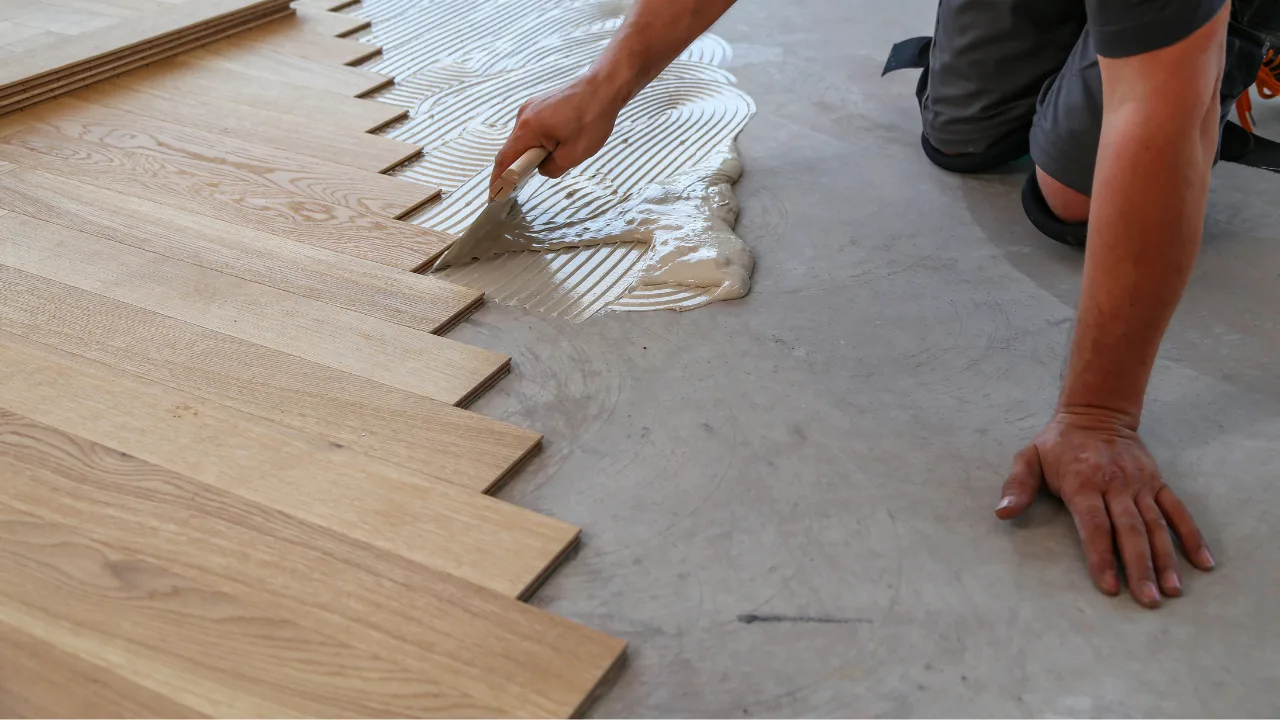
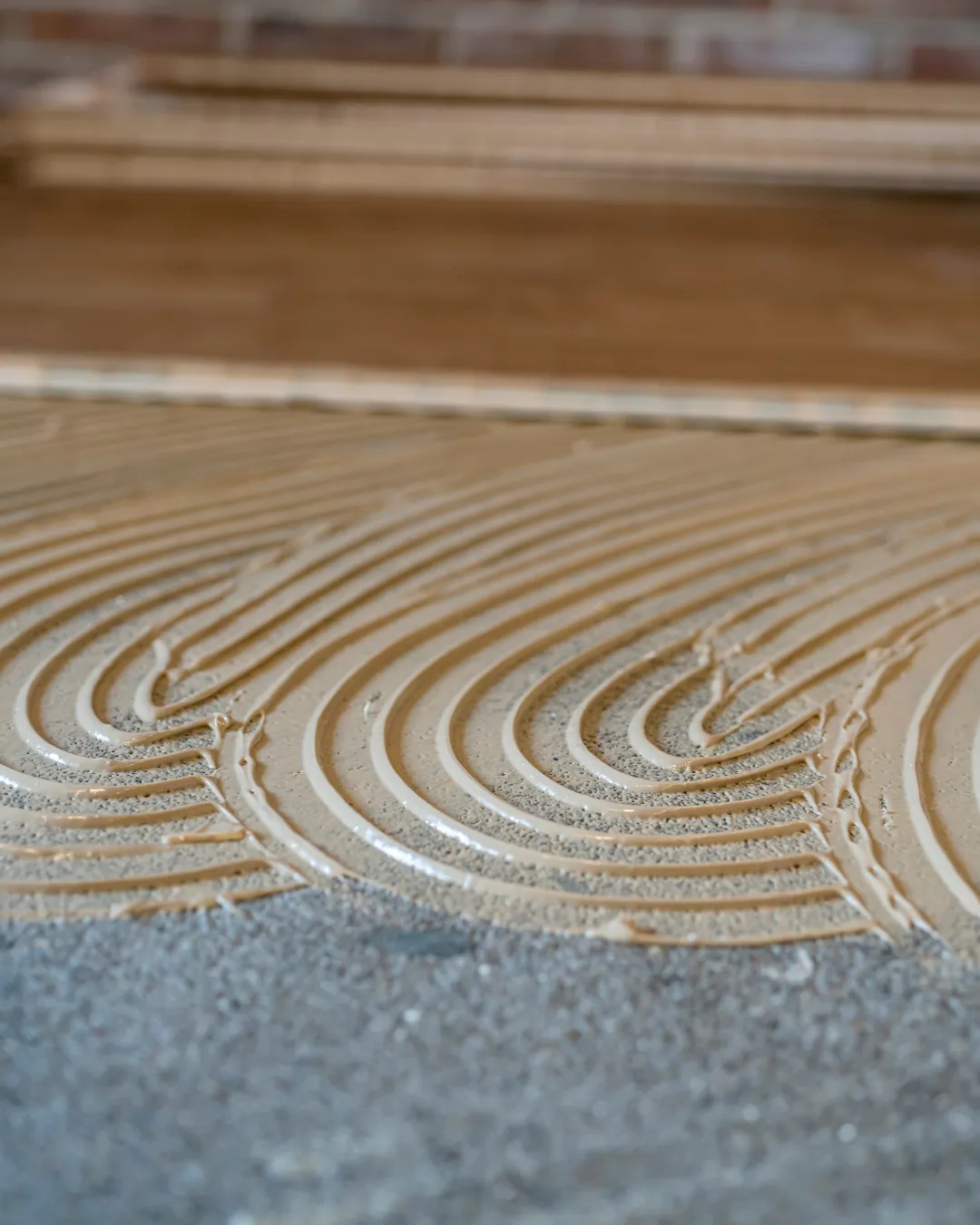
Glue-down luxury vinyl, which we call LVT on our site, is thinner, around 2 mm, and bonds directly to the subfloor with a pressure-sensitive adhesive. Nothing floats and nothing shifts. There is no hollow sound underfoot, and because the planks are so thin, it is the answer for doorways where a thicker floor would trap a door or a dishwasher.
Glue-down is also the most watertight vinyl install we offer, because the adhesive seals the seams as well as the surface. That makes it the pick for laundry rooms, bathrooms with a lot of standing water, and light commercial spaces with rolling loads. Commercial-grade wear layers up to 28 mil are available. See the luxury vinyl tile page for what we stock.
The tradeoff is time and prep. The slab has to be clean, flat and dry with no old adhesive, and the new adhesive needs about 24 hours to reach full cure. You can walk on it the same evening and roll furniture back the next day.
- ✓Best for: wet rooms, height-restricted doorways, light commercial, sunrooms with big temperature swings, very large open plans
- ✓Zero movement, no hollow sound, thinnest profile
- ✓Needs a cleaner and flatter slab, and 24 hours before furniture
SPC, WPC and flexible vinyl: which core for which room
Inside the click-lock category, the core changes how the floor behaves. SPC (stone-plastic composite) is the densest and most dent-resistant, and it hides minor slab imperfections best. WPC (wood-plastic composite) is warmer and softer underfoot with more cushion. Flexible, thinner LVP needs the flattest subfloor of the three. All three are 100 percent waterproof. Our guide to comparing LVP products properly walks through wear layers and core types in detail.
The slab decides how much prep you are paying for
Most Oklahoma City homes sit on concrete, and concrete is rarely flat. A floating floor over a low spot flexes every time you walk on it, and flexing fatigues the locking joint until a seam opens. A glue-down floor over a high spot telegraphs every bump through the thin plank.
So the first real step of any LVP install is assessing and correcting the slab. High spots are ground down. Low spots are filled with a cement-based patch or self-leveling compound. Cracks are filled. Old adhesive is scraped or ground off. On a wood subfloor the concerns are different: soft spots, squeaks and moisture near bathrooms. Our subfloor prep guide covers what we look for and how it gets quoted, and Oklahoma clay soil explains why slabs here move in the first place.
Moisture, acclimation and expansion
Vinyl itself is waterproof, but the slab under it is not, and moisture vapor coming up through concrete can break down adhesive or grow mold under a floating floor. We check slab moisture before install and use a vapor barrier or a moisture-tolerant adhesive when readings call for it.
LVP also needs to sit in the house at normal temperature for a day or two before install. It does not move as much as wood, but a floor installed cold in January and warmed by summer will expand, and a floor installed tight will peak at the seams. That is also why a floating floor gets a perimeter gap at every wall, covered by baseboard or quarter round, and a T-molding at long runs where the manufacturer requires one. Glue-down needs less of this because it cannot move as a unit.
What install day looks like
Furniture out, old floor removed if it is coming out, subfloor prepped and moisture-checked, underlayment or vapor barrier laid if the product needs it, layout planned so cuts and transitions land where they should, planks installed with staggered end joints and undercut door jambs, then trim, transitions and cleanup. Our complete installation guide walks the whole sequence stage by stage.
A single room is a few hours. A whole home in click-lock is one to two days. Glue-down adds time for adhesive open time and the extra care the spread requires.
Choosing between them for your house
If you are doing most of the house, want it done fast, and are going over an existing floor, click-lock is almost always right. If you are doing a laundry room or a bathroom that sees standing water, have a door or an appliance that will not clear a thicker floor, or want a floor that never makes a sound, glue-down earns its extra day.
Many OKC homes end up with both: click-lock through the living areas and bedrooms, glue-down in the laundry and baths, with a matching transition between. We bring both samples to the free in-home estimate, check your slab, and price each room the right way. If you are weighing vinyl against laminate first, our LVP vs laminate guide settles that decision.