How Long Does Flooring Installation Actually Take?
· 6 min read · By Floors To You OKC
It is one of the first questions we get asked and one of the hardest to answer in a sentence, because the laying of the floor is often the shortest part of the process. What actually determines how long you are living around a project is material availability, tear-out, subfloor condition and acclimation. Here is an honest walk through each.
Material availability sets the outer limit
Nothing starts until the material is on the ground. Anything in stock can move quickly — one of the reasons we hold in-stock carpet, luxury vinyl, hardwood and tile is precisely so a job does not sit waiting on a supplier.
Special orders are a different timeline entirely, and it is worth knowing which you are choosing at the showroom rather than after you have fallen in love with a sample. If speed matters, say so early and we will show you what can move fastest.
Tear-out varies more than people expect
Pulling up carpet is fast. Pulling up glued-down vinyl, or tile set in mortar over concrete, is slow and physical. Removing tile in particular can take as long as installing the new floor, and it produces a great deal of dust and debris.
If there are multiple old layers — and in older Oklahoma City homes there frequently are — each one adds time. This is the single most common reason a project runs longer than a homeowner expected, and it is knowable in advance if someone actually looks before quoting.
Subfloor work is the wildcard
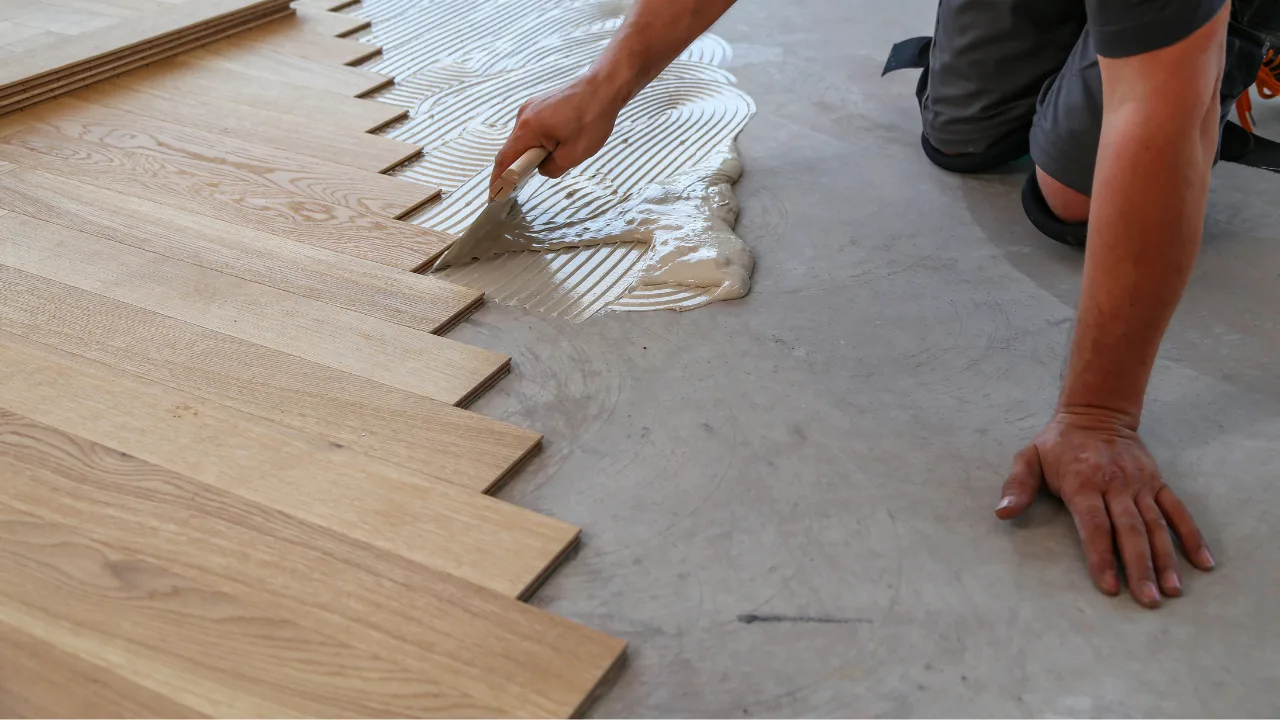
Once the old floor is off, the subfloor is visible for the first time. Where it is sound and flat, the new floor goes straight down. Where it needs levelling, patching or moisture remediation, that work has to happen and some of it has curing time attached that cannot be rushed.
Given central Oklahoma soil movement, a slab that needs some levelling is not unusual. We would rather build the possibility into the conversation up front than surprise you with it mid-project.
Acclimation, and which floors need it
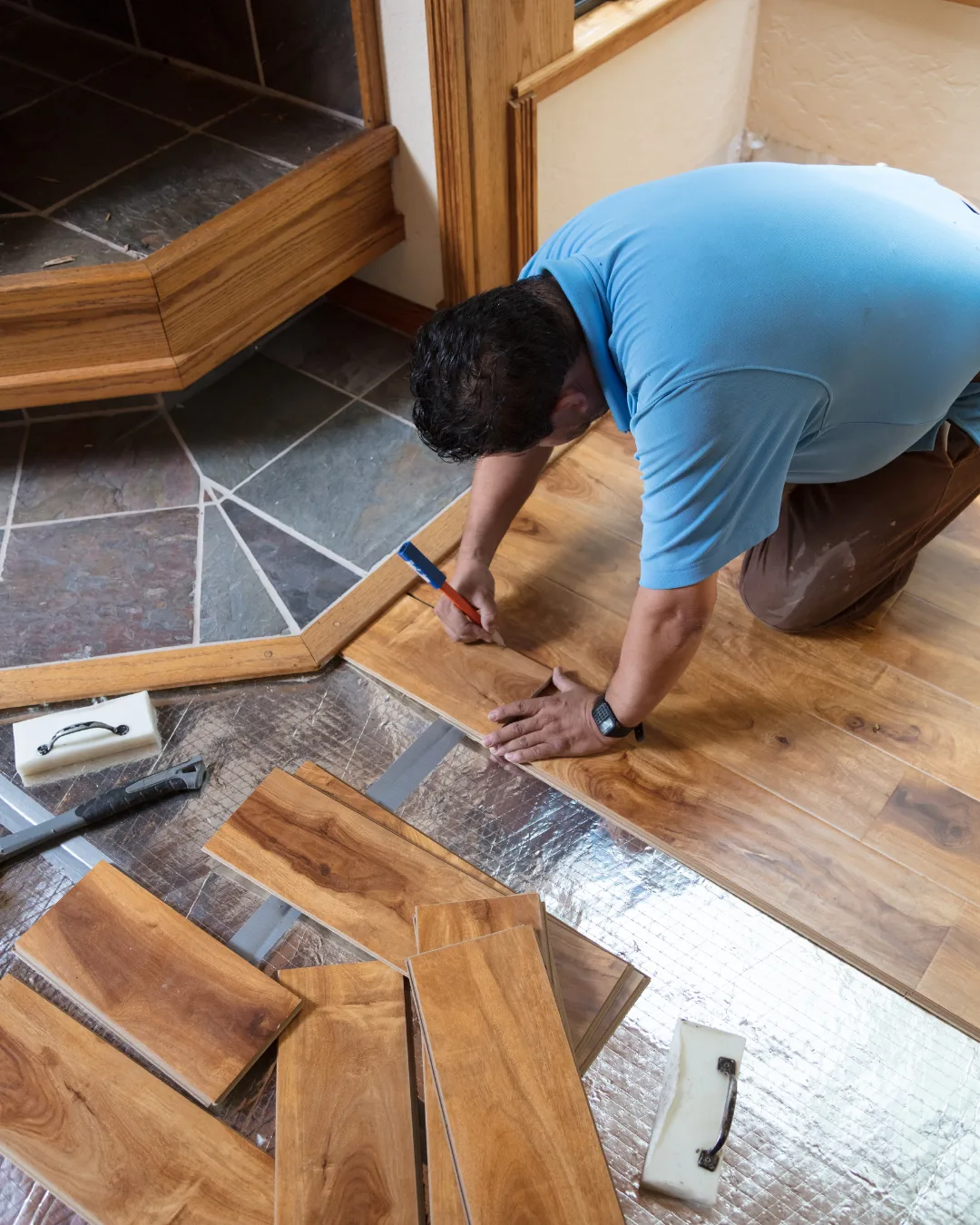
Wood-based materials need time in the house before installation so they reach equilibrium with the indoor humidity. Skipping acclimation is how a hardwood floor ends up with gaps in winter or buckling in summer.
This is dead time in the schedule but it is not optional, and the length depends on the product and the conditions. Tile and most vinyl do not need it, which is part of why those projects finish sooner.
- ✓Carpet: fastest, minimal preparation, no acclimation.
- ✓Click LVP: quick once the subfloor is right.
- ✓Tile: slower — setting and grouting both have curing time.
- ✓Hardwood: acclimation plus installation, and site-finishing adds more.
Living in the house while it happens
Most people stay put, and the practical questions are which rooms are unusable when, whether furniture is being moved by us or by you, and how dust is being contained. Tile tear-out is the dustiest phase by a distance.
We would rather give you a realistic sequence at the estimate than an optimistic start date. Knowing that the kitchen is out for a specific stretch lets you plan around it; discovering it halfway through does not.