Flooring for Aging in Place: Safer Floors for Older Homeowners
· 7 min read · By Floors To You OKC
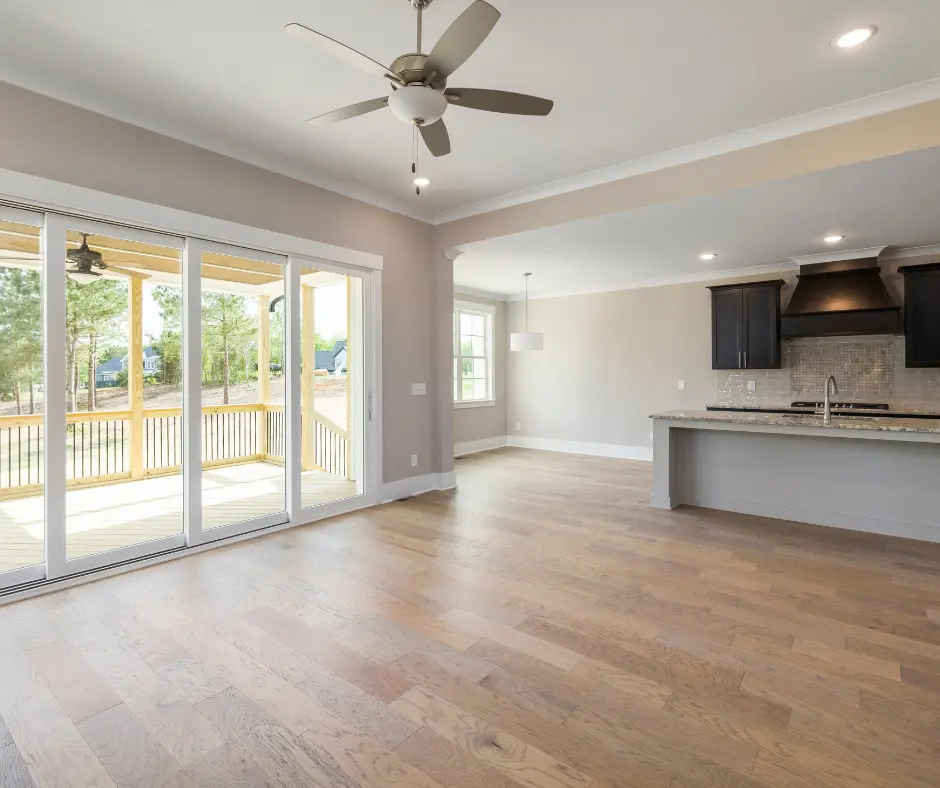
Many Oklahoma City homeowners replace their floors with a long future in mind: staying in the house they love as they get older, or getting a home ready for a parent who is moving in. The floor plays a bigger part in that than most people expect. It is what every step, every walker and every wheelchair rolls across, and a poor choice can make a house harder to live in. Here is what to look for, room by room, and what to talk through before you choose.
What makes a floor easier to live on
Planning a floor for aging in place comes down to a few practical goals. The floor should give good grip, wet or dry. It should be firm and smooth enough that a walker, cane or wheelchair moves easily. It should have as few edges and height changes as possible. And it should be easy to keep clean without getting down on hands and knees or using a heavy machine.
No single floor is perfect at all of these. Softer floors cushion better but are harder to roll across; very hard floors roll easily but are less forgiving. The right answer depends on the person and the room, which is why it is worth talking through how the home is actually used before choosing.
Fewer transitions and level thresholds
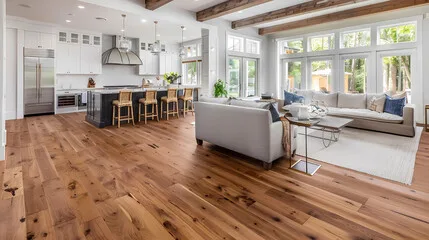
Every place where one floor meets another is a small change in height, and small changes in height are what catch a toe or the front wheel of a walker. The single most useful thing you can do is reduce them. Running one floor through the main living areas, kitchen and halls removes most of the strips in the house. Our guide to using the same flooring throughout the house covers how to plan that.
Where a transition is still needed, it should be as low and gradual as possible, and fastened securely so it cannot lift. Choosing floors with similar thicknesses in adjoining rooms helps. Our guide to transitions and baseboards explains the pieces and where they go.
Hard floors: grip and glare
Luxury vinyl plank is one of the most common choices for aging in place. It is smooth for rolling, waterproof, easy to clean with a dust mop, and slightly softer and warmer underfoot than tile. Look for a textured or embossed surface and a low-sheen finish rather than a glossy one, and ask about the product's slip resistance at the estimate.
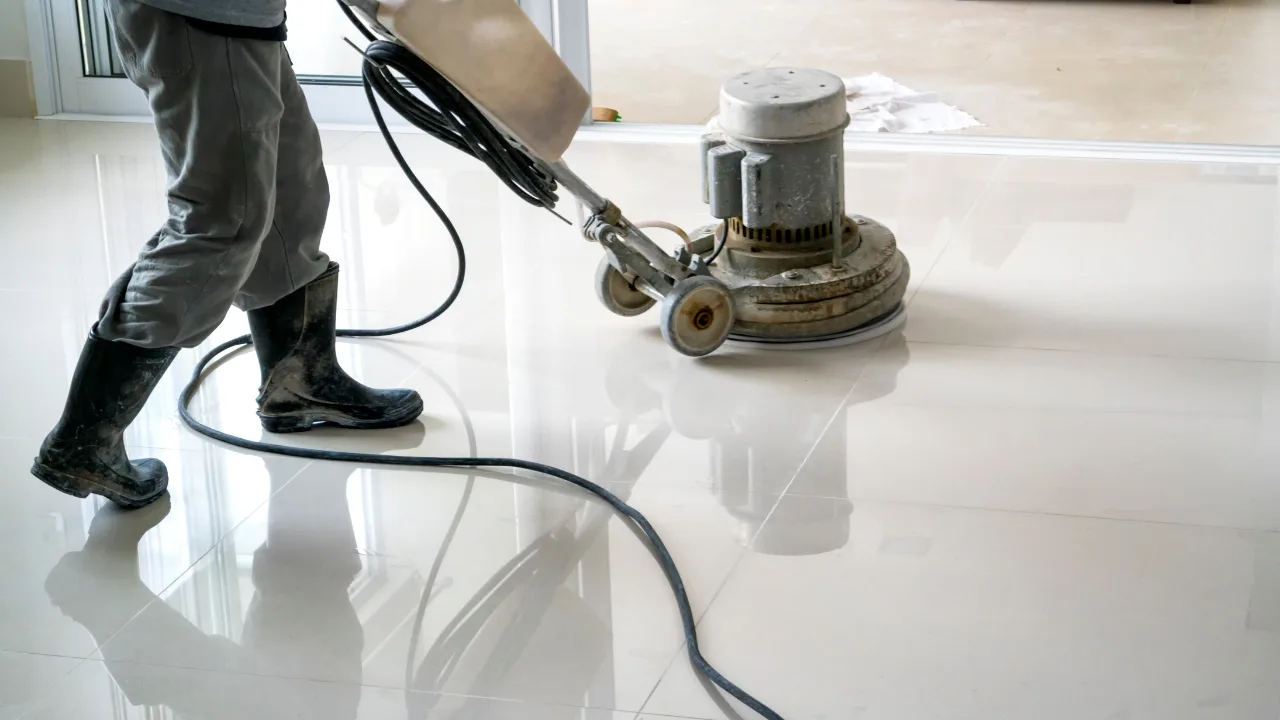
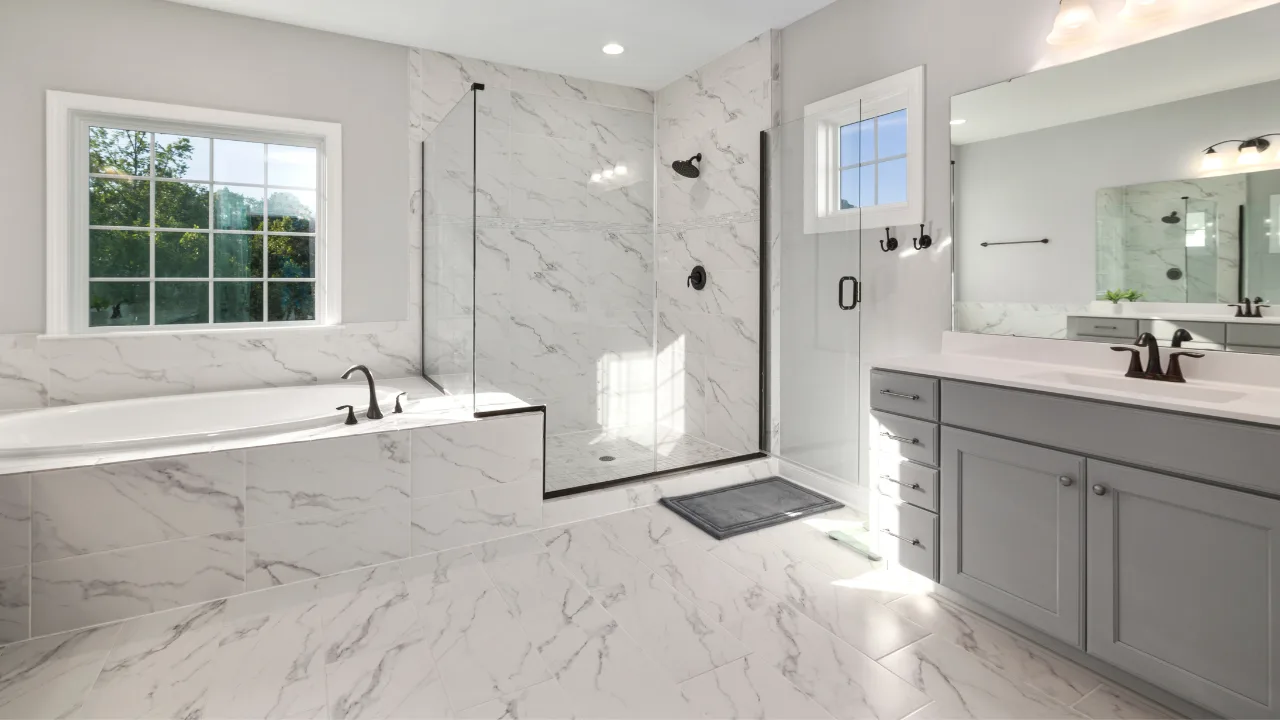
Shine is worth thinking about too. High-gloss floors reflect light from windows and lamps, and that glare can make it harder to judge the floor surface, especially for older eyes. A matte or satin finish is easier to see clearly. In bathrooms, choose tile or vinyl with a textured surface, and smaller tiles with more grout lines grip better than large polished ones. Our bathroom flooring guide covers wet-room choices in more detail.
Carpet: comfort, with the right construction
Carpet gives good grip and a softer landing, and many people want it in the bedroom. The construction matters, though. Thick, plush carpet over a soft, deep pad feels wonderful but is hard to push a walker or wheelchair across, and the soft surface can feel unsteady. A lower, denser carpet over a firmer, thinner pad is easier to move on and still comfortable.
Our carpet pad guide explains how pad thickness and density change how a carpet feels. Throw rugs are a different matter: loose rugs and curled edges are a common tripping hazard, so if you want rugs, use ones with a non-slip backing or rug pad, and keep their edges flat.
Room by room
Here is how the choices usually work out in a home being set up for the long term.
- ✓Living areas, kitchen and halls: one continuous hard floor, such as textured, low-sheen LVP, with no transitions between rooms
- ✓Bedroom: low, dense carpet on a firm pad for comfort, or the same hard floor as the rest of the house if a wheelchair or walker is in daily use
- ✓Bathroom: textured tile or waterproof vinyl with good grip when wet, and a level entry from the hall
- ✓Entry: a hard floor with a heavy, flat, non-slip mat to catch water and grit at the door
- ✓Stairs: carpet or a securely fastened runner for grip, with a clearly visible edge on each step
Stairs and visibility
Stairs deserve special attention. Carpet is the most slip-resistant stair surface, and on hard stairs a fastened carpet runner adds grip where people actually walk. It also helps when the edge of each step is easy to see. A stair nose that contrasts with the tread, or a runner that stops short of a visible edge, makes each step easier to judge. Our guide to stair flooring compares carpet, LVP and wood on stairs.
Plan the installation around the household
Installing floors in a home where someone has limited mobility takes a little more planning. Faster installs mean fewer days with rooms out of use, and our crew moves the furniture and puts it back, so nobody in the house has to lift anything. If someone needs a bedroom or bathroom kept usable during the job, tell us at the estimate and we will plan the order of the rooms around it. Our installation prep checklist covers the rest.
Book a free in-home estimate and we will bring samples, walk the house with you and whoever will be living on these floors, check every doorway and threshold, and give you an itemized quote.