Waterproof Flooring in OKC: What the Label Actually Promises
· 6 min read · By Floors To You OKC
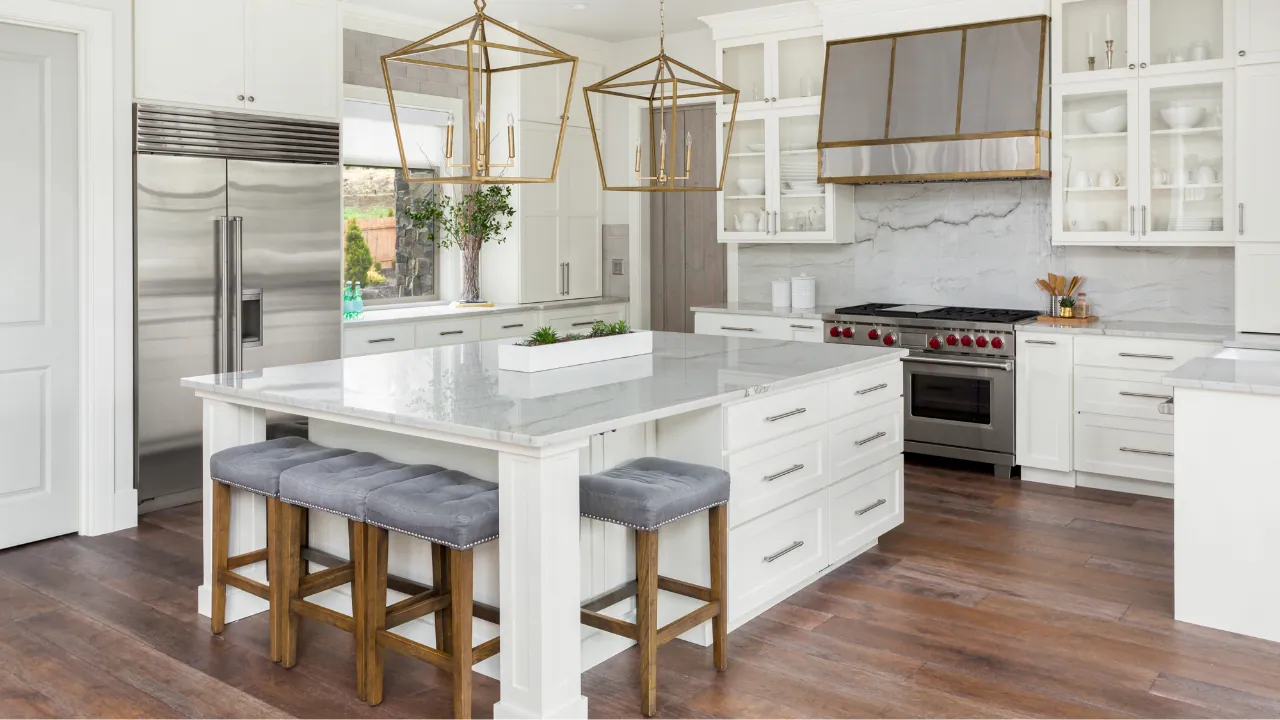
Almost every floor on the market now gets sold as waterproof in one form or another, and the word is doing more work than it can support. It describes the plank, not the floor — and that difference is where homeowners get caught out. Here is what the labels actually mean and how to choose for the rooms in your house that really see water.
Waterproof vs. water-resistant vs. waterproof core
These three phrases get used almost interchangeably in showrooms, and they are not the same claim.
The practical translation is simple: waterproof means a spill will not ruin the floor. It does not mean water cannot get past the floor.
- ✓Water-resistant means the material tolerates moisture briefly and needs to be dried promptly. Modern laminate falls here — it shrugs off a wiped-up spill but not standing water.
- ✓Waterproof core means the plank body itself will not swell, warp, or break down when it gets wet. This is what luxury vinyl offers, because the core is plastic-based with no wood fiber to absorb anything.
- ✓Fully waterproof assembly means the whole installation, including seams and edges, keeps water out. Tile with a proper waterproofing membrane is the real example, which is why it is the only correct material for a shower.
The part the label leaves out
Nearly all waterproof plank flooring installs as a floating floor. The planks lock to each other and rest on underlayment, which means there is a seam between every plank and a deliberate expansion gap around the whole perimeter, hidden by baseboard.
Water finds those seams. It travels through, spreads across the subfloor underneath, and sits in a space with no airflow. The flooring looks perfect the entire time. The problem is beneath it, and you usually find out from a smell or a soft spot rather than from looking at the floor.
So the honest framing is that waterproof flooring protects your floor from spills. It does not protect your subfloor from a leak.
What this means room by room in Oklahoma
Oklahoma homes deal with a specific set of water problems — big temperature swings, storm-season humidity, and a lot of homes built on slab where moisture comes up from below rather than down from above.
- ✓Kitchens: waterproof core is the right call. The realistic risks are a dishwasher or fridge line that leaks slowly behind an appliance where nobody notices for a while.
- ✓Bathrooms: waterproof core or tile. Shower floors and surrounds are tile with a membrane, no exceptions.
- ✓Laundry rooms: think about failure, not spills. A supply line lets go in gallons, not cups. Tile or a waterproof core floor, and a leak sensor is worth more than any flooring upgrade.
- ✓Entries and mudrooms: waterproof core handles tracked-in rain and mud without complaint.
- ✓Slab-on-grade rooms: concrete passes moisture vapor upward continuously, even with no visible water. Waterproof core products are unaffected by it where wood-based floors degrade over time.
- ✓Bedrooms and formal living: water is not the deciding factor. Choose on looks, comfort, and budget.
The install details that matter more than the label
Two floors with identical waterproof ratings can perform very differently depending on how they were put in.
None of these show up on a product spec sheet, and all of them affect whether a waterproof floor actually keeps water out of your subfloor.
- ✓Sealing the perimeter expansion gap in bathrooms and laundry rooms closes the most direct route water takes underneath.
- ✓A moisture barrier under the floor is essential over any slab. Vapor coming up has to be stopped or it collects beneath the floor.
- ✓Tighter modern locking systems resist water intrusion at seams considerably better than older click products did — worth asking about.
- ✓Flat subfloor. Gaps and flex at seams open the path that water uses.
How we would actually spec your house
Very few homes need one floor everywhere. The sensible plan is waterproof material through the rooms that genuinely see water and whatever you actually want in the rooms that do not. That usually costs less than running a premium waterproof product through the entire house, and it gets you a better result in the bedrooms.
We map this room by room during the in-home estimate, looking at where water realistically shows up in your house rather than applying a blanket rule.